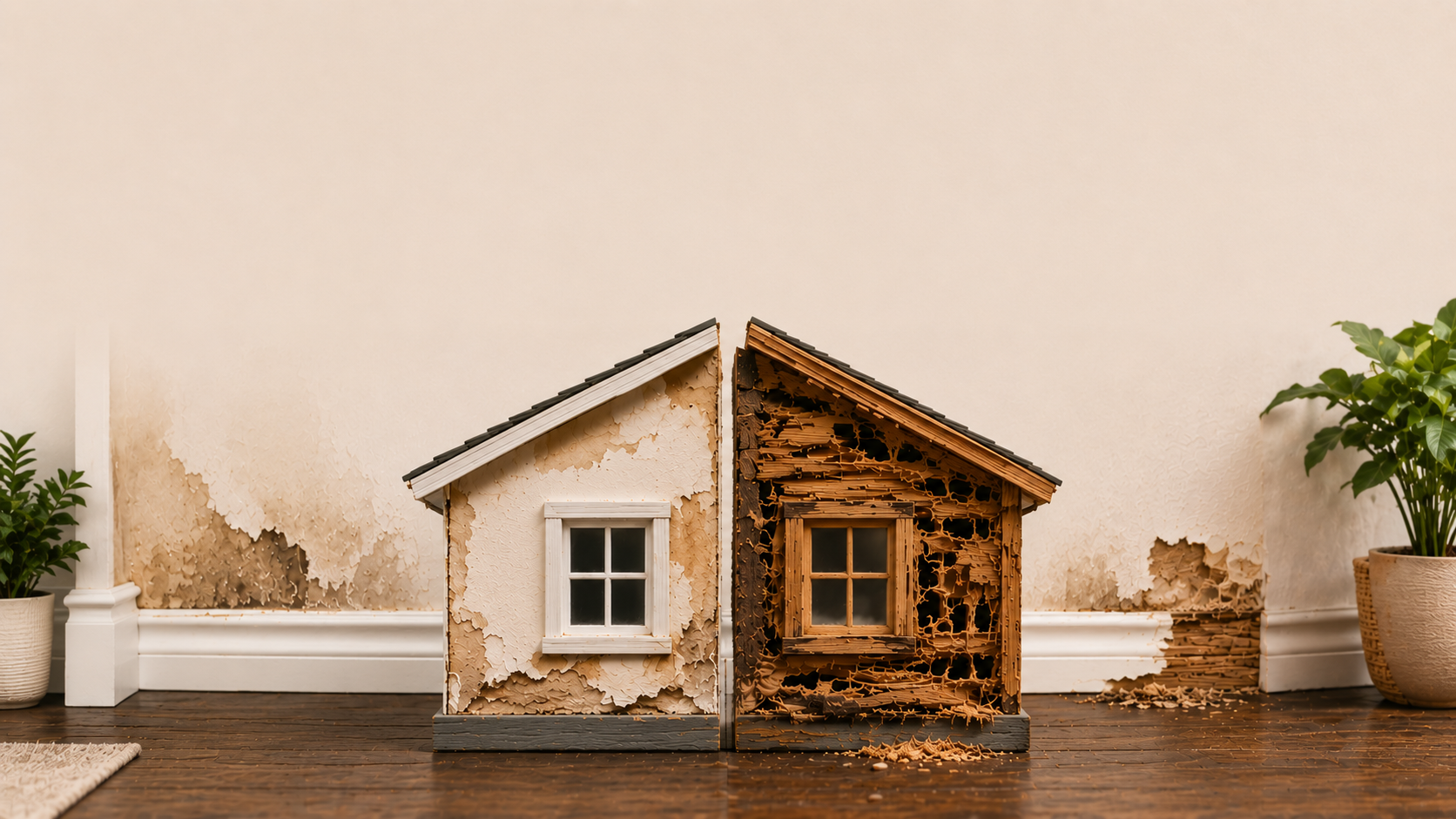
Costly Damage Pests Can Cause To Homes And Buildings
How Destructive Can Pests Be Indoors?
It doesn’t take a huge infestation to cause huge problems. Tiny pests, left unchecked, can quietly tear through a structure, chewing, burrowing, nesting, and contaminating until the damage becomes a full-blown headache—financially and structurally. What starts out as a few signs—some droppings here, a weird smell there—can quickly escalate into a property owner’s worst nightmare. And the frustrating part? A lot of the destruction happens behind the scenes, in walls, attics, crawl spaces, and ductwork, making it easy to overlook until it’s too late.
The Hidden Threat In Your Walls
One of the most dangerous things about pests like rodents and insects is their ability to hide while they work. They make themselves comfortable in areas you don’t often look—inside your walls, behind appliances, above ceilings. Rodents in particular are notorious for chewing through virtually anything. Electrical wiring is one of their favorite targets, and the consequences can be more than just a shorted outlet. Exposed wires are a serious fire hazard, and a frayed line tucked inside a wall or attic insulation can spark without warning.
Then there’s insulation. Rodents shred it to make nests, insects burrow into it, and wildlife leave droppings that seep into it, saturating it with contaminants that are expensive—and unpleasant—to clean. Once insulation has been compromised, your heating and cooling system works overtime trying to keep up, driving up energy bills while leaving parts of your home drafty or stifling. It’s the kind of damage that’s easy to ignore until you realize you’re spending hundreds more each month just to stay comfortable.
Termites take destruction to another level. These insects can go unnoticed for years, quietly devouring the wooden framework of a home from the inside out. Support beams, floor joists, wall studs—nothing’s off-limits. By the time visible signs start to appear, like bubbling paint or sagging floors, the internal damage might be so severe that it requires structural reinforcement. That kind of repair isn’t just costly—it’s also incredibly disruptive, often forcing people out of their homes while it’s being fixed.
Roofs, Foundations, And Everything In Between
Roofs and attics are another favorite entry point for pests. Squirrels, raccoons, and even birds can tear through roofing materials, lift shingles, and wedge themselves into vents and soffits. Once inside, they can trample insulation, chew rafters, and even rip apart ductwork. The damage can let in moisture, and before you know it, mold starts spreading. That musty smell creeping through the house might be more than just stale air—it could be a sign of an infestation that’s gone unnoticed for months.
Down below, the foundation isn’t off the hook either. Some pests, especially those that burrow or nest underground, can cause soil movement around your property. This might sound harmless, but over time, it can shift the base of your home, causing cracks to form in walls, floors, and even ceilings. Ants and termites are also known to make their way up from below, setting up shop inside foundation walls and expanding their colonies upward. When moisture gets involved, pests thrive. Damp basements and crawl spaces practically invite insects and rodents to settle in, and they rarely come alone.
Even HVAC systems aren’t safe. Rodents love ductwork—it's dark, warm, and provides direct access to multiple parts of the home. Once inside, they can tear through ducts, nest inside them, and leave behind droppings and urine that then get circulated through the air system. That kind of contamination isn’t just gross—it can also lead to respiratory issues, foul odors, and a steady decline in indoor air quality.
Surface-Level Clues With Deep Roots
Sometimes, it’s the small things that are most alarming. A few tiny holes in your pantry boxes might not seem like a big deal, until you realize that rodents or insects have been chewing through your food supplies for weeks. Contaminated food is one of the fastest ways pests can cause both health and financial damage, and once pests know where to find a meal, they’ll keep coming back.
Wood damage might appear subtle at first. You might spot some fine dust or hear faint clicking sounds coming from inside the walls. But in reality, carpenter ants and termites could be tunneling deep into the wooden structures that hold everything together. These pests weaken wood from the inside, and unlike moisture damage, this isn’t something that can just be patched over. Repairs often involve replacing entire support sections, which can be staggeringly expensive, especially if the infestation spread through multiple parts of the house.
And then there’s the smell. Pests often leave behind strong odors—ammonia from urine, the stench of droppings, or the smell of a carcass that got stuck and died in a vent or wall cavity. These odors cling to surfaces and can be nearly impossible to remove without tearing into the structure itself. Replacing drywall, pulling up carpet, or removing cabinetry just to get rid of a lingering stench is the kind of repair few people think about until it’s unavoidable.
The Long Game: How Time Makes Damage Worse
The worst part about pest damage is that it rarely stops where it starts. Rodents don’t just gnaw a few wires and move on—they breed. One or two pests quickly become dozens. A single termite colony can expand to hundreds of thousands. Insects like cockroaches or ants can establish nests deep within the structure, and as their numbers grow, so does the scope of the damage.
Time is the enemy when it comes to infestations. The longer pests are allowed to remain, the more entrenched they become. What begins as a nuisance can turn into a full-scale renovation project if pests are left to their own devices. And while a can of spray or a couple of traps might seem like a quick fix, DIY solutions rarely reach the heart of the issue. Nesting sites, hidden pathways, and deep colonies often require professional intervention to eliminate completely.
It’s not just about getting rid of pests—it’s about repairing what they leave behind. Insulation soaked with urine has to be removed. Chewed wiring must be replaced. Wood damaged by insects might need to be torn out and rebuilt. Even after the pests are gone, the damage can linger—sometimes for years—if not properly addressed.
Take Damage Seriously Before It Gets Worse
At Cascade Pest Systems, we understand how quickly small problems can spiral into serious ones. Pests don’t operate on your schedule—they find cracks, slip in, and start causing damage before you’ve even realized they’re there. That’s why it’s so important to take early signs seriously and deal with potential infestations head-on. The longer you wait, the more it costs to fix—not just financially, but in time, stress, and disruption to your life.
If you’ve noticed unusual noises in the walls, strange smells, or signs of damage that don’t seem to have an obvious cause, it might be time to act. Our team can help identify the source, eliminate the problem, and make sure your property doesn’t suffer any more damage than it already has. Contact Cascade Pest Systems today—we’re here to help protect your home before hidden damage becomes a major issue.